Electricity North West Limited
Most of the region
- Greater Manchester
- Lancashire
- Cumbria
If you live in Manchester, Bolton, Preston, Lancaster or Carlisle, this is almost certainly your operator.
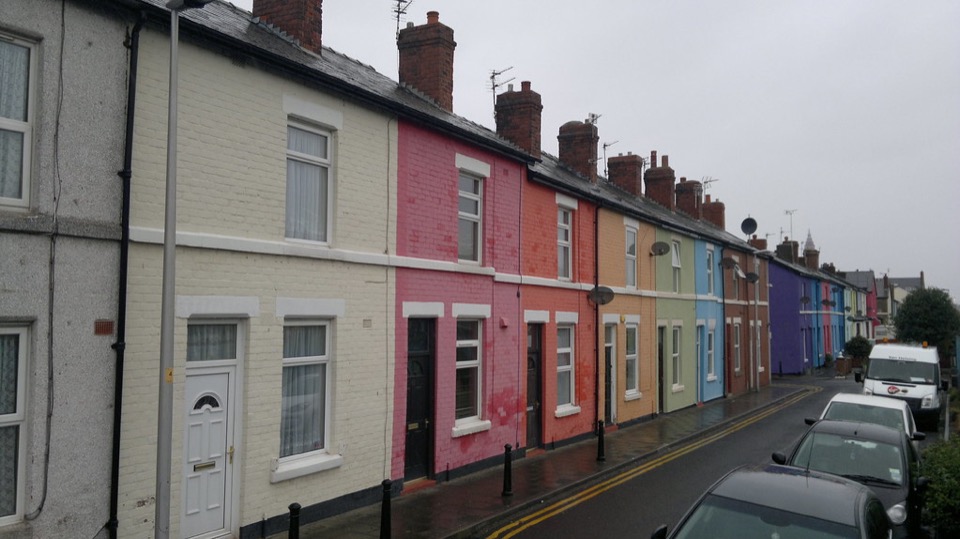
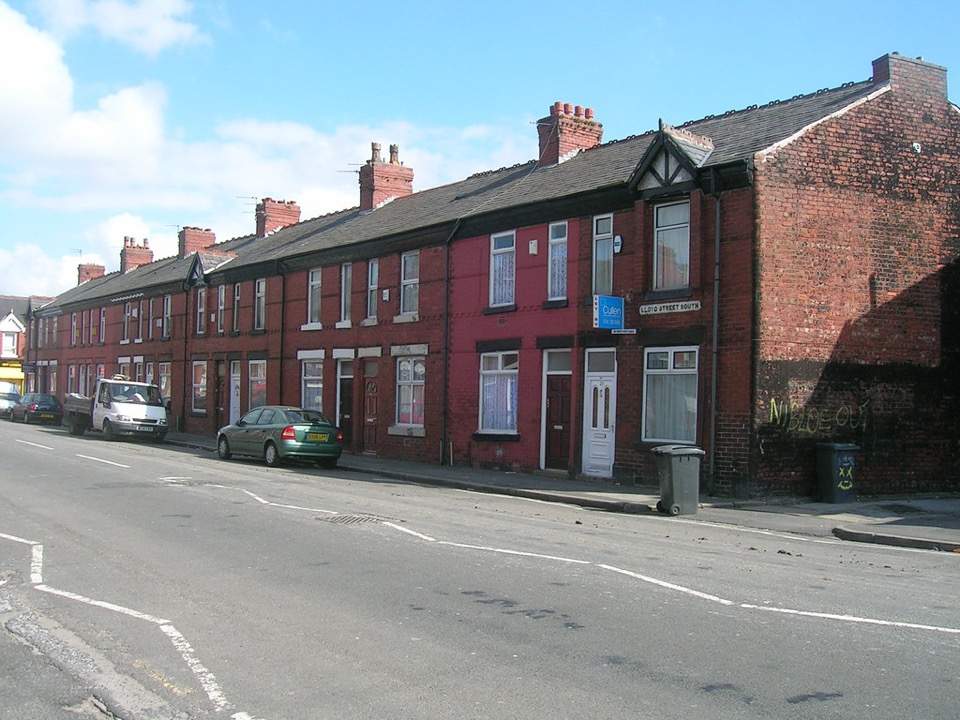
Painted render terraces in the rain at Blackpool.
We reply to every enquiry by email.
Two different companies run the electricity network in the North West, so a house in Liverpool and a house in Manchester notify different people. Send us your postcode and we'll work out which one is yours, check where the panel would go, and arrange an electrician if you need one.
Your name, postcode, email and the surface you have in mind. Back comes an email naming your operator, the rule for that surface, and a yearly figure.
We reply by email. Your details stay with us and we take no commission.
Electricity North West runs the network across most of the region. SP Manweb runs it in Merseyside and Cheshire, and in North Wales. You need to tell whichever one covers your address.
If you live in Manchester, Bolton, Preston, Lancaster or Carlisle, this is almost certainly your operator.
Painted render terraces in the rain at Blackpool.
If you live in Liverpool, Birkenhead, Chester or Warrington, your operator is SP Manweb. Its area runs west into North Wales.
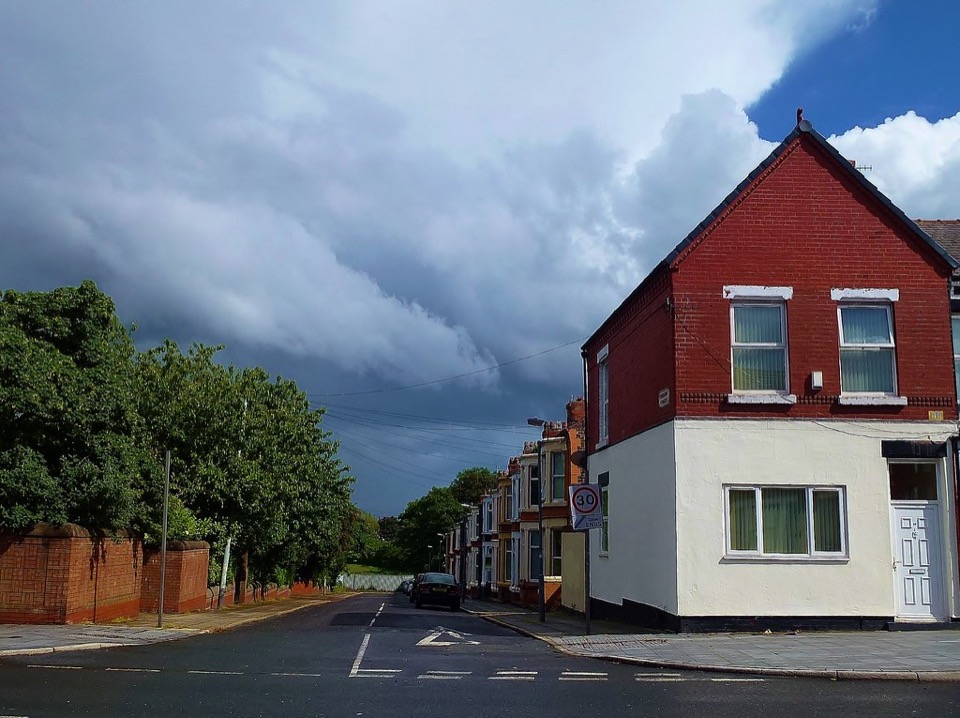
A corner house at Dingle Lane in Liverpool.
Please check it rather than take our word for it. Our map of the licence areas is a working one. You can put your postcode into the operator's own checker, or ring 105 free from anywhere in England, Scotland or Wales and they'll put you through to the operator for your address.
These figures are from PVGIS, for a point in Manchester and an 800 W device with 14 per cent system losses and nothing shading it.
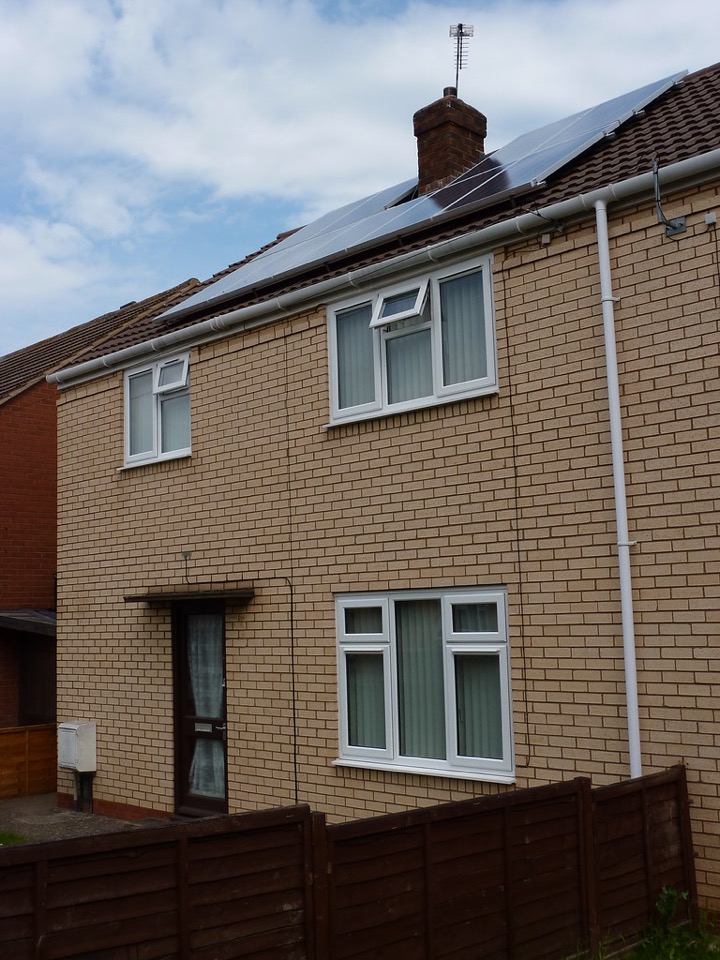
Manchester is the lowest of the English regions on an ideal roof. A frame on open ground here still makes more than an ideal roof in Inverness, which models at 628 kWh a year. Treat all four figures as a ceiling, because they assume nothing shades the panel. They also tell you what a panel makes. What you save depends on how much of it you're using at the time, and batteries aren't part of the approved class.
The permitted development right for solar on a house changed on 27 August 2026. For plug-in solar it no longer covers wooden walls, balconies or timber cladding.
If your balcony is timber, or your wall is clad in it, you'd need planning permission to put a panel there. We check this before anyone quotes you.
Here is what the right does allow on a house. Up to 200 mm of projection on a wall that abuts a highway, and up to 400 mm on other walls. On a pitched roof it has to stay under the ridge and stand no more than 200 mm off the tiles. A flat roof allows 600 mm of height above the roof.
You cannot use it on a wall that faces a highway in a conservation area or a World Heritage Site. You cannot use it on a scheduled monument, or anywhere inside the grounds of a listed building. The listed building itself needs planning permission and listed building consent.
There's a transitional year. Until 27 August 2027 you can follow the old rules or the new ones.
We'll do as much or as little of this as you want.
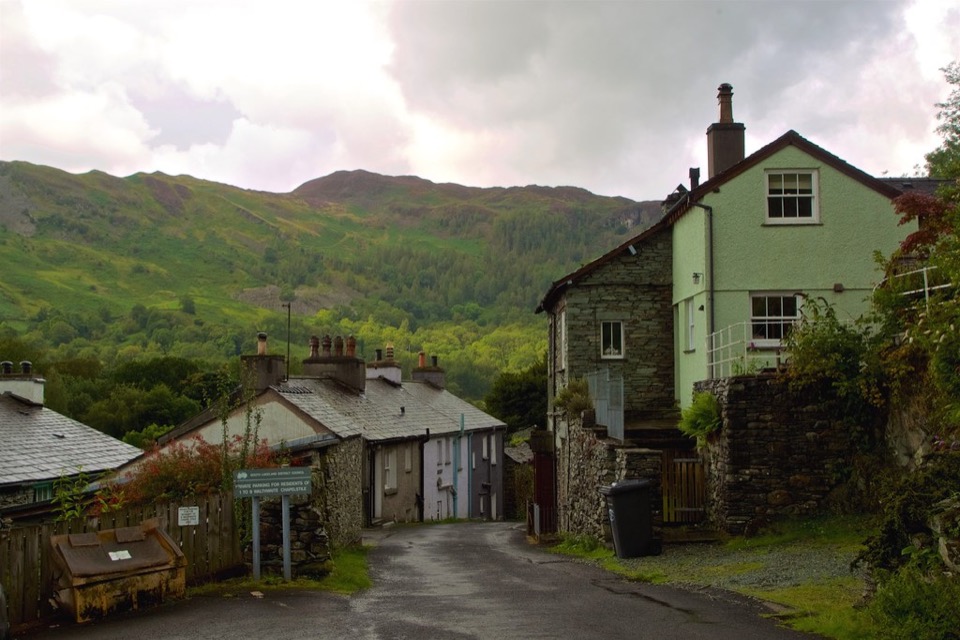
We look at where the panel would go and tell you whether the rules cover it.
Read this page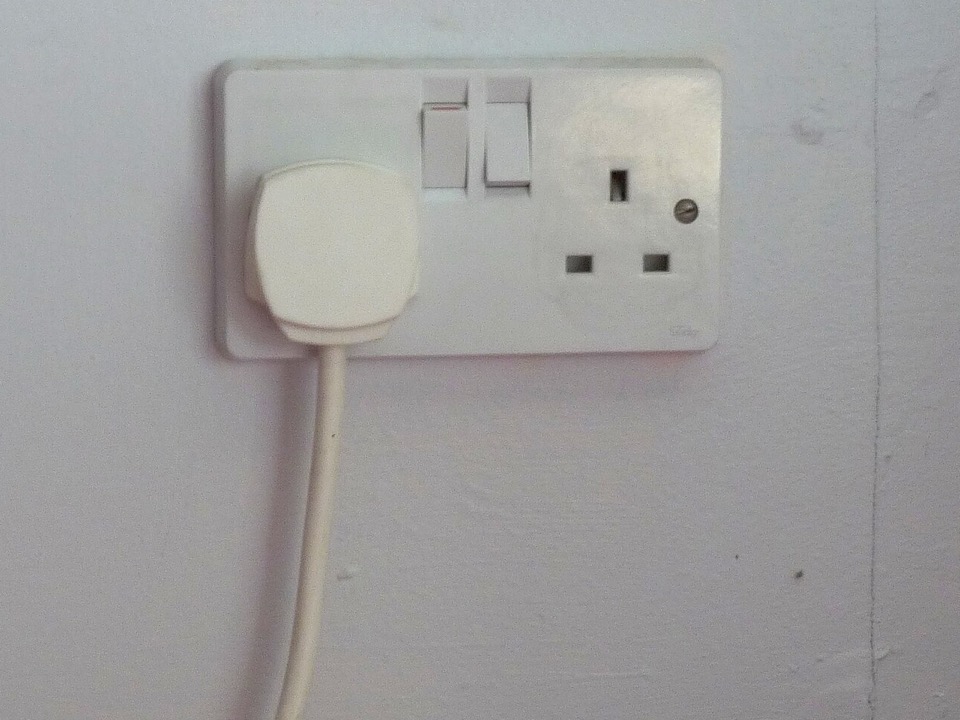
You can plug it in yourself, and an electrician fits a weatherproof socket if you need one.
Read this pageElectricity North West or SP Manweb, and the form they need within 28 days.
Read this pageThese limits come from the interim product specification and the network rules.
The most a plug-in solar device can put into the mains. The panels themselves can add up to 2000 W, so panel wattage and output are two different numbers.
G98 was changed in 2026 to allow one device per household. The specification allows one per final ring circuit, and the network rule is the one that applies.
Up to four PV modules on one inverter, and no more than two in series in any one string.
The lowest rating allowed for the plug and socket if they are fitted outside the house.
You fill in a short online form with your name, email address and installation address within 28 days of installing it. This applies in Great Britain.
A device has to be type tested and entered on the ENA Type Test Register before anyone can sell it. A kit missing from that register has not been assessed by anybody.
You cannot plug one into an extension cable, a multi way adaptor, an RCD adaptor or a travel adaptor. That warning goes on the device and in the instructions. If the panels add up to more than 960 W, the specification asks for a professional view on whether the installation is suitable. Plug-in batteries, and solar kits sold with a battery, are not part of the approved class.
No. On our working map, Merseyside is SP Manweb, along with Cheshire and North Wales. Check it on the operator's own postcode checker or ring 105, and then the 28 day form goes to the right company.
A panel makes less here than anywhere else in England. A point in Manchester models at 689 kWh a year on an ideal roof pitch, and 684 kWh on a frame on open ground. Where you put it makes more difference than the region does.
Not under the planning rules as they were rewritten on 27 August 2026. They do not cover wooden walls, balconies or timber cladding. Until 27 August 2027 you can follow the old rules instead, so ask your council which applies to you.
No. G98 allows one device per household.
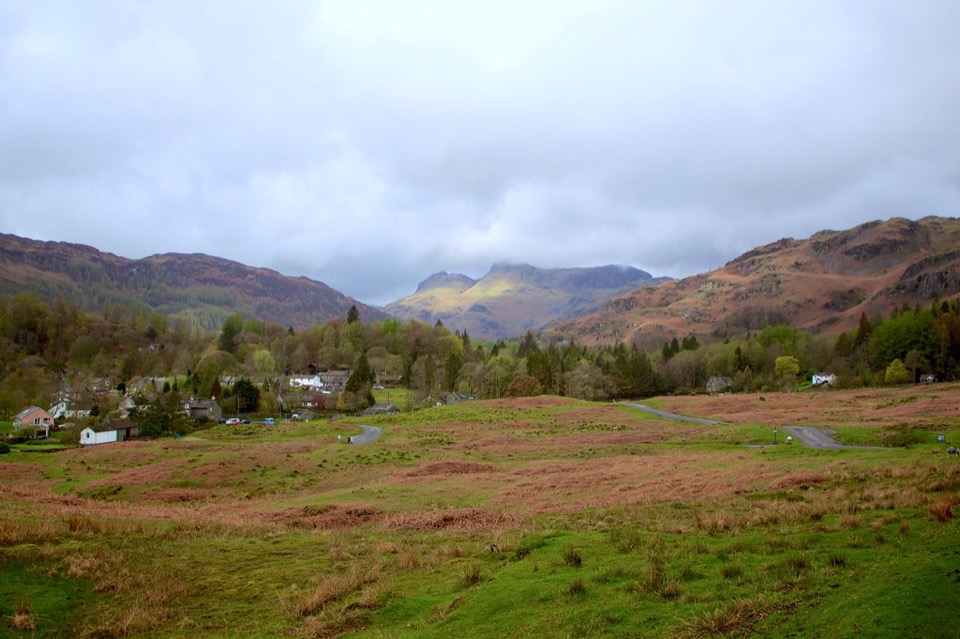
We'll tell you which operator covers your address, whether the rules cover your surface and what a panel would make in a year. If it won't work at your house, we'll say so.
Send us your postcode